eczema flare care routine works best when it is simple enough to use on tired days and specific enough to calm the chaos of itchy, dry, reactive skin. I like routines that feel almost plain at first glance, because plain steps are easier to repeat when your skin is noisy, your patience is thin, and you do not want to test ten new products just to get through the morning.
This article is not about perfection. It is about building a daily pattern that gives your skin fewer surprises. I am aiming for practical choices, not dramatic promises. If you are dealing with a flare now, the goal is to lower friction, protect the skin barrier, and make the next few hours feel more manageable. If you want a broader set of skin-friendly guides, the Beauty Health View home page is a good place to browse related articles.
What changes during a flare
When skin enters a flare, the biggest shift is often not what you see first. The first shift is usually how the skin reacts to ordinary things. A shower that used to feel fine can sting. A shirt collar that never bothered you can start rubbing. Soap, sweat, dry air, and even a careless towel pass can feel louder than they should. That is why a routine that works well on quiet days may fall apart during a flare.
I find it useful to think of a flare as a temporary rise in sensitivity. The skin barrier is not behaving the way you want it to, so small habits suddenly matter more. That does not mean every reaction has the same cause. For one person it may be heat. For another it may be fragrance. For someone else it may be a mix of stress, rough fabric, and a late-night scratch cycle. The point is to watch patterns instead of trying to force one universal explanation.
There is also the human side of it. Flared skin can affect sleep, concentration, and mood. It can make someone feel more irritable than usual, and then the irritation feeds back into more scratching. I have seen how quickly that loop can take over a week. The best answer is rarely one dramatic step. It is usually a set of small choices that keep the loop from getting stronger.
That is where an eczema flare care routine earns its value. It gives you a repeatable response when your skin starts asking for attention. You do not need to guess from scratch each time. You can fall back on a plan that you already trust.
- Notice which sensations show up first, such as tightness, stinging, or rough patches.
- Track where the flare appears, because location can hint at friction, sweat, or product exposure.
- Watch the timing, since bedtime, mornings, and post-shower moments often reveal useful clues.
- Keep the response simple enough that you can repeat it even on a rushed day.
Building an eczema flare care routine that fits real life
When I build an eczema flare care routine, I start by removing complexity. The more steps a routine has, the more chances there are for inconsistency. A routine that uses four dependable habits is often better than one that looks impressive but disappears as soon as life gets busy. That matters because skin care is not just about product choice. It is about whether the plan survives your actual schedule.
I like to think in anchors. An anchor is a step that happens almost every day, even if the rest of the routine changes a little. For many people, the anchors are a gentle cleanse, a moisture step, and a friction check. The exact products can change, but the order stays familiar. That way your skin and your brain both know what happens next.
A good first version of the routine can be very short. One gentle wash. One moisturizer or ointment step. One habit that lowers rubbing or heat. That may sound too plain, but plain is useful. During a flare, your skin usually wants less experimentation, not more. I would rather see someone use a bland, consistent plan for two weeks than a clever plan they abandon in three days.
Here is a simple reset flow I often recommend as a starting point.
- Use lukewarm water and keep the washing time brief.
- Pat the skin dry instead of rubbing it hard.
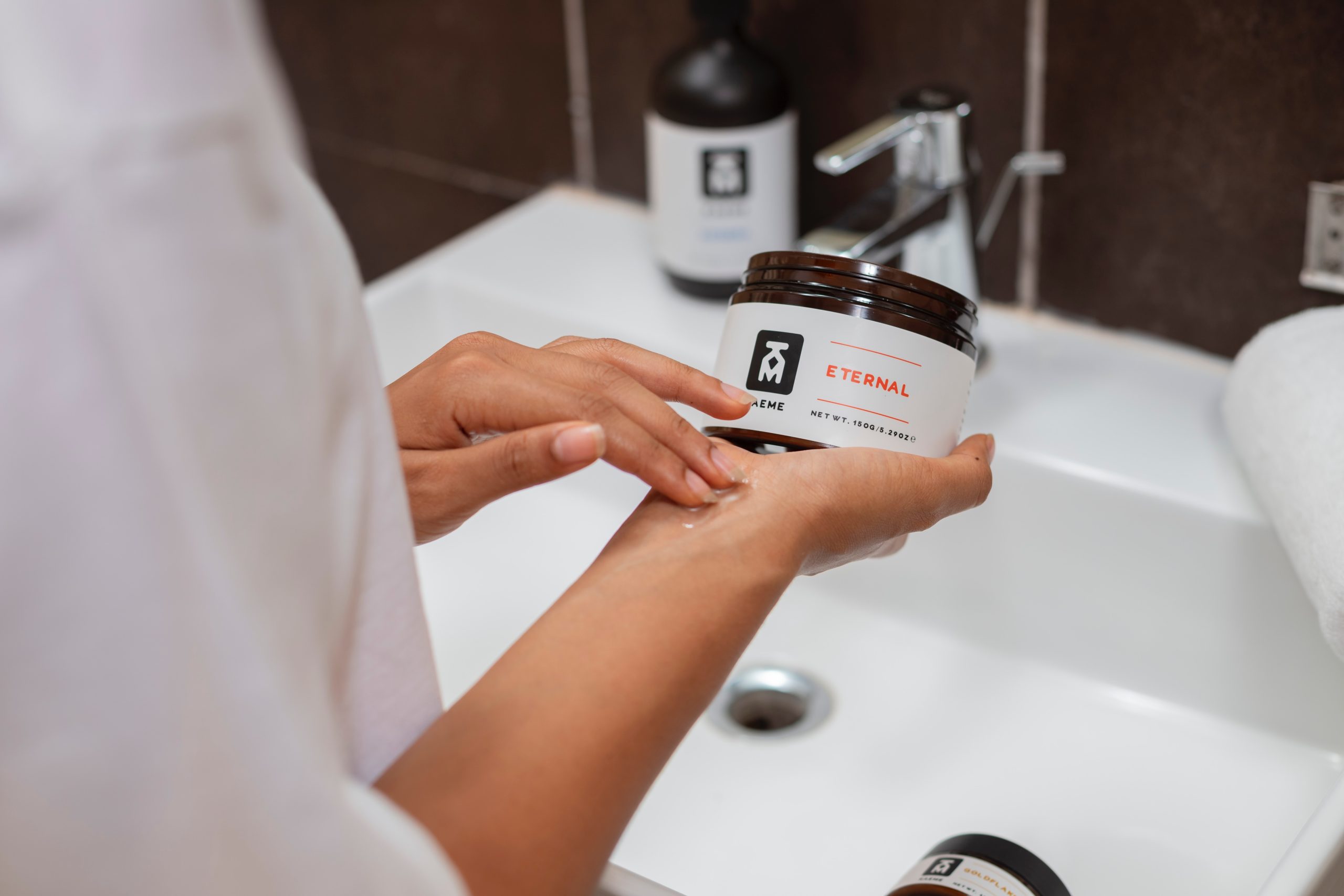
- Apply a fragrance-free moisturizer while the skin is still slightly damp.
- Choose loose, soft clothing for the next few hours.
- Notice whether heat, sweat, or product residue seems to make the skin more reactive.
If you want a routine that can survive real mornings, pick products and habits that are easy to reach. Put the moisturizer where you can see it. Keep a backup tube in your bag. Leave a clean towel near the shower. Small placement choices can matter more than people expect, because habits fail when the right item is too far away.
Some people want a complicated flow chart. I usually tell them to start with three words instead. Clean. Seal. Reduce. Clean the skin gently, seal in moisture, and reduce the things that rub or sting. That sentence can carry a surprising amount of day-to-day usefulness.
Cleanse without stripping the skin
Cleansing during a flare is a balance problem. You want the skin clean enough to avoid buildup, sweat, and residue, but you do not want to leave the skin feeling stripped or squeaky. That squeaky feeling is not a badge of cleanliness. It is often a sign that the skin barrier is under stress.
Water temperature is one of the first things I look at. Very hot water can feel comforting in the moment, but it often leaves skin more irritable afterward. Lukewarm water is a safer default for many people because it is less harsh and easier to keep brief. The same idea applies to scrubbing. A washcloth used with a heavy hand can do more harm than a gentle rinse can fix. I prefer light pressure and short contact time.
The cleanser itself matters too. A fragrance-free, low-foam option is often easier to live with than a strongly scented gel. Foam is not the enemy, but a cleanser that leaves the skin tight or itchy after rinsing is probably not a great match for flare days. If your hands are extra sensitive, you can also keep soap on the areas that truly need it and use water alone on spots that are already irritated. That kind of selective washing is often more comfortable than washing every inch the same way.
After cleansing, the drying step is worth slowing down for. Rubbing with a towel can wake up irritation fast. Press the towel against the skin, lift, and repeat. The goal is not to polish the skin. The goal is to leave it lightly damp so the next step can lock in moisture.
A few small cleansing habits can make a real difference:
- Keep showers short rather than turning them into long warm soaks.
- Use the smallest amount of cleanser that still feels comfortable.
- Pay special attention to areas that collect sweat, but do not overwork irritated patches.
- Switch to a soft towel that does not feel scratchy on contact.
- Wash after heavy sweating so residue does not sit on the skin for hours.
I also like to remind people that clean does not have to mean polished. The skin does not need to be scrubbed into submission. It needs a calm reset. That shift in mindset alone can change how a shower feels.
Moisture layering that actually sticks
If there is one part of an eczema flare care routine that gets the most attention, it is moisture. That makes sense. Dryness and rough texture are easy to feel, and people usually want a product that makes the skin feel better fast. The tricky part is that moisture works best when the timing and texture are sensible. A good product used at the wrong time can still disappoint.
My preferred rule is to apply moisturizer soon after washing, while the skin is still slightly damp. That is when the product can trap some of the remaining water on the surface and help the skin feel less tight. If you wait too long, the skin dries down before the product has a chance to do much. If you pile on too many layers at once, the skin can feel greasy and uncomfortable, which makes people less likely to repeat the step later.
Texture also matters. Some people like richer creams. Others prefer ointment-style formulas on the roughest spots and a lighter cream elsewhere. There is no prize for choosing the heaviest texture available. The better choice is the one you can tolerate across several days. I often suggest trying one product for a short stretch before adding another. That way you can tell what actually helped and what just felt new.
For very dry patches, a simple layered approach can work well.
- After washing, leave the skin a bit damp.
- Apply a fragrance-free moisturizer over the main area.
- Add a richer layer on the roughest spots if needed.
- Reapply on hands, wrists, ankles, or other areas that get rubbed more often.
It also helps to place moisture supplies in more than one spot. I keep one tube near the sink and one near the bed in my own mental model of a useful setup. That way, if I forget the first opportunity, I do not lose the whole day. Convenience is not a small detail. Convenience is what turns an idea into a habit.
Some people ask whether more product is better. I usually say no. More is not automatically better. A steady amount used consistently is usually more useful than a huge amount used once and forgotten. The skin tends to respond better to rhythm than drama.
Clothing, laundry, and the friction you feel all day
People often focus on cleansers and moisturizers, but friction can quietly drive a lot of discomfort. Clothes, bedding, seams, labels, detergent residue, and sweat all shape how the skin feels through the day. If a shirt looks harmless but leaves the neck or elbows irritated by lunchtime, that is data worth respecting.
Soft, breathable fabrics are usually easier to wear during a flare. That does not mean every synthetic fabric is a problem or every natural fiber is perfect. What matters is the way the fabric feels against your skin, how it handles sweat, and whether the seams or tags create rubbing. I have seen people feel much better after switching to a softer undershirt or cutting out a scratchy tag. That kind of change sounds tiny, but tiny changes add up when they happen all day.
Laundry choices deserve attention too. Strong fragrance can linger in fabric longer than people expect. Extra detergent can also leave residue that bothers sensitive skin. A more modest wash cycle and a gentle rinse can be easier on the skin than an overloaded routine. If you are testing a new detergent, give it time and keep the rest of the routine steady so you can tell whether the detergent is helping or not.
Heat and sweat are another common pair. When the skin gets warm and damp, some people notice itching rises quickly. If that sounds familiar, think about how you dress for errands, exercise, bedtime, and travel. A layer you can remove is often more useful than a heavy outfit you have to endure. I like to keep a light extra layer nearby so a sudden temperature shift does not become a skin problem.
Here is a short friction audit I find useful:
- Do collars, cuffs, waistbands, or seams touch the same spots every day?
- Does the skin feel worse after a sweaty commute or a warm room?
- Are your sheets, towels, or pajamas making the skin feel rough?
- Have you changed detergent, fabric softener, or body wash recently?
You do not need to build a perfect clothing system. You just need to notice which items quietly make the day harder. Once you know that, you can make calmer choices without turning every outfit into a science project.
Food, stress, sleep, and your daily pattern
Not every flare has a clean trigger, and not every trigger is easy to pin on one thing. Food, stress, sleep, heat, and daily rhythm can overlap in messy ways. That is why I am cautious about broad claims. A single list of forbidden foods or a single hidden cause usually sounds more certain than reality allows. Most people do better by watching their own pattern over time.
Stress often shows up indirectly. It may not feel like a dramatic emotional event. It can be a week of short sleep, rushed meals, skipped breaks, and a brain that never fully powers down. Skin can react to that environment even when nothing else has changed. I have seen people blame a cleanser when the bigger issue was a string of late nights and too little recovery. That does not mean the cleanser was perfect. It means the whole picture matters.
Sleep is especially important because skin comfort and sleep quality can feed each other. If itch wakes you up, the next day feels harder. If the next day feels harder, the skin care routine gets rushed. That is the kind of cycle worth interrupting early. A more consistent bedtime, cooler room, and better bedding can do more than people expect.
If you suspect a pattern, a simple log is often enough. You do not need a detailed spreadsheet. Just note the basics for a week or two.
- What you ate, especially if a flare seemed to follow a meal.
- How much sleep you got.
- Whether the day was hot, sweaty, or unusually stressful.
- Which products touched the skin.
- Where the flare appeared and how intense it felt.
The value is not in proving a perfect theory. The value is in noticing repeats. When the same pattern shows up three or four times, you have something useful to work with. Until then, I would not rush to rewrite your entire diet or daily routine.
If a specific food seems suspicious, the best move is usually to ask a qualified professional for help sorting it out rather than guessing alone. That keeps you from making your routine more restrictive than it needs to be.
When to ask a dermatologist or another qualified professional
There is a point where home care is no longer the whole answer. That does not mean you failed. It means the skin needs more input than a routine can give by itself. If the flare is spreading, if the skin is cracking deeply, if sleep keeps getting broken, or if the area looks unusually raw or crusted, it is reasonable to ask a dermatologist or another qualified professional to review what is going on.
I also pay attention to changes that feel out of pattern. If a product that used to be fine now burns on contact, if the rash behaves differently than usual, or if one area becomes much more inflamed than the others, that is worth a closer look. The goal is not to self-label every change. The goal is to get clearer guidance when the routine is not enough.
It can help to bring notes instead of trying to remember everything in the appointment. I would write down when the flare started, what products were used, how sleep has been, and which spots are most affected. A few photos taken in good light can also help show how the skin changes from day to day. That makes the visit more useful and gives the clinician a better picture of the timeline.
Here are the signs I would personally take seriously:
- Sleep is getting interrupted night after night.
- The skin is bleeding, crusting, or becoming more painful.
- Redness is spreading beyond the usual area.
- One product seems to make the skin much worse very quickly.
- Home routines are no longer giving any clear comfort.
If you want to read more practical skin articles before your visit, keep an eye on the rest of the guides at Beauty Health View. I still think a good routine matters, but I also think it matters to ask for help when the pattern gets too confusing to solve alone.
The right question is not, Can I handle this forever by myself? The better question is, What information would make the next step clearer?
A 7-day eczema flare care routine you can actually maintain
Sample routines help because they turn vague advice into a day-by-day shape. I am not suggesting that one schedule fits everyone. I am suggesting that many people do better when they can see what a realistic week might look like. Once the week is visible, it becomes easier to adapt.
| Day | Morning focus | Evening focus | Practical note |
|---|---|---|---|
| Monday | Gentle cleanse and quick moisture step | Check the roughest areas and reapply cream | Start the week with the simplest version of the routine |
| Tuesday | Notice clothing friction and adjust layers | Short shower, then pat dry | Use the same products so the day stays predictable |
| Wednesday | Look for heat or sweat triggers | Extra moisture on hands, wrists, or elbows | Midweek is a good time to compare notes |
| Thursday | Keep the shower brief | Check laundry, bedding, and towel texture | Small friction sources tend to show up by now |
| Friday | Use the fastest version of the routine that still works | Prepare supplies for the weekend | Convenience matters when plans change |
| Saturday | Notice whether travel, heat, or activity changes the skin | Cleanse and moisturize before bed | Keep a spare tube in your bag or car |
| Sunday | Review the week and note what helped most | Reset towels, clothes, and bedside supplies | Use the review to simplify next week |
The point of a weekly plan is not to police yourself. The point is to reduce decision fatigue. When the same few steps repeat, you spend less energy deciding what to do and more energy noticing what your skin actually needs.
I also like the idea of a backup plan. If the full routine feels like too much on one night, have a three-step version ready. Quick cleanse, quick moisture, loose clothing. That can be enough to keep the routine alive until you have more time.
Maintenance is easier when the routine has levels. A basic level for busy days, a medium level for ordinary days, and a fuller level when the skin needs extra attention. That way you do not fall off the plan just because the plan asked too much of you.
Common mistakes that make skin feel more reactive
Some mistakes are obvious, and some are sneaky. The obvious ones are hot showers, rough scrubbing, and heavy fragrance. The sneaky ones are product overload, testing too many changes at once, and assuming a routine is not working just because it did not help in one day. Skin usually needs time, consistency, and less noise.
One mistake I see often is adding multiple new products during the same week. When that happens, you lose the ability to tell what helped and what irritated the skin. If you want a better read on your routine, change one thing at a time. That is slower, but it is far more informative.
Another mistake is ignoring the areas that get rubbed the most. Hands, neck, eyelids, ankles, waistband areas, and behind the knees can have very different needs from the rest of the body. A product that feels fine on the arms may sting on a thinner or more exposed area. The routine should respect that variation.
Here is a quick list of habits I try to cut down when the skin is reactive:
- Very hot water
- Long showers
- Scrubbing with a rough cloth
- Strong fragrance
- Testing several products at once
- Ignoring sweat and heat after exercise
- Wearing scratchy or tight fabrics for long stretches
There is also the habit of overcorrecting. When skin feels difficult, it is tempting to panic and strip the routine down to almost nothing or replace everything with a completely different plan. That can make sense in the moment, but it often leaves you with no stable baseline. I prefer calm, measured adjustments. Shift one variable. Watch it. Then decide what to keep.
Progress on skin often looks boring from the outside. Fewer bad mornings. Less rubbing. A shower that stings a little less. A patch that is rough but not as loud. Boring improvement still counts.
Keep the routine simple enough to maintain over time
The best routine is the one you can keep using when the weather changes, your schedule gets messy, or you are simply tired of thinking about skin. That is why I keep coming back to simple systems. Simplicity is not the same as doing less care. It is about removing extra noise so the useful steps are easier to repeat.
Season changes are a good example. Dry air can make skin feel tighter. Heat and sweat can make it feel itchier. Travel can interrupt your usual products and bedding. A routine that depends on perfect conditions will break the moment life gets busy. A routine that has a small, dependable core is much more durable.
My favorite maintenance habit is a weekly review. Not a long one. Just a quick look at what changed. Did a new detergent bother the skin? Did a particular shirt rub more than usual? Did sleep get worse after a few late nights? Those questions are enough to keep the routine honest.
You can also make the routine easier by setting up your space. Keep the moisturizer where you wash your hands. Keep a backup near the bed. Choose towels that feel softer. Store the less gentle products out of sight so they are not the first things you reach for on an irritated day. Environment design is part of routine design.
If I had to leave you with one practical idea, it would be this. Build a routine that feels almost too plain. Plain routines get used. Used routines teach you what your skin likes. And once you know that, the whole process becomes less chaotic.
An eczema flare care routine does not need to be complicated to be useful. It just needs to be repeatable, calm, and honest about what your skin is asking for today.